
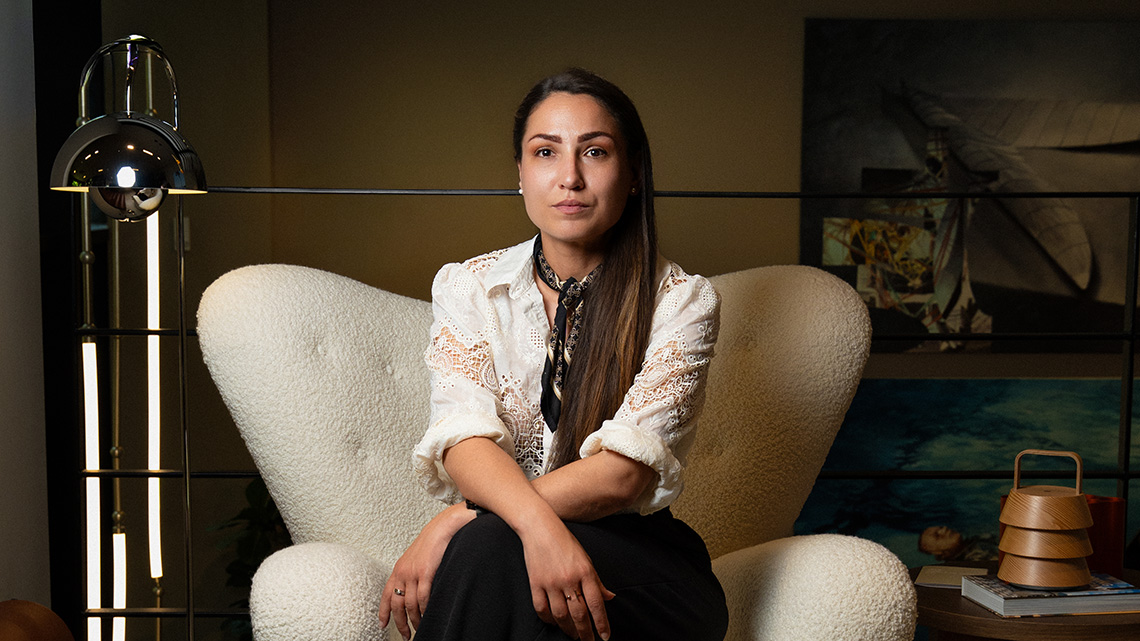
Sandra Jančić, Founder and CEO, Ailour Studio®
We often walk past beautiful buildings that stand in striking symmetry, shaping the skyline of our steel-and-glass metropolis. We move through them, heads tilted up at glass facades that catch the last shimmer of the setting sun. Yet few truly mesmerize the imagination or linger in our thoughts long after we’ve passed them by.
However, there are rare spaces that transcend architecture and become part of our story.
They become the backdrop to family dinners, life-changing conversations, quiet moments of reflection, and the countless experiences that shape who we are. These are not merely buildings; they are environments that enrich the lives unfolding within them.
Sandra Jančić builds those spaces.
The founder and CEO of Ailour Studio® believes that architecture achieves its highest purpose not when it captures attention, but when it improves the way people live.
“Architecture and design are not only about aesthetics or functionality. They are about creating harmony between people and the spaces they inhabit,” she says.
It is a philosophy that has guided her journey from a curious observer fascinated by construction sites to one of Croatia’s dynamic women entrepreneurs, shaping a new conversation around architecture, well-being, and community.
A Foundation Built on Curiosity
Sandra’s relationship with architecture began long before she entered a design studio. As a child, she followed her father to construction sites, places most children would have found loud and unremarkable. She found them revelatory. Watching workers transform blueprints into walls, rooms, and rooftops, Sandra understood something, intuitively, that most architects spend careers trying to articulate.
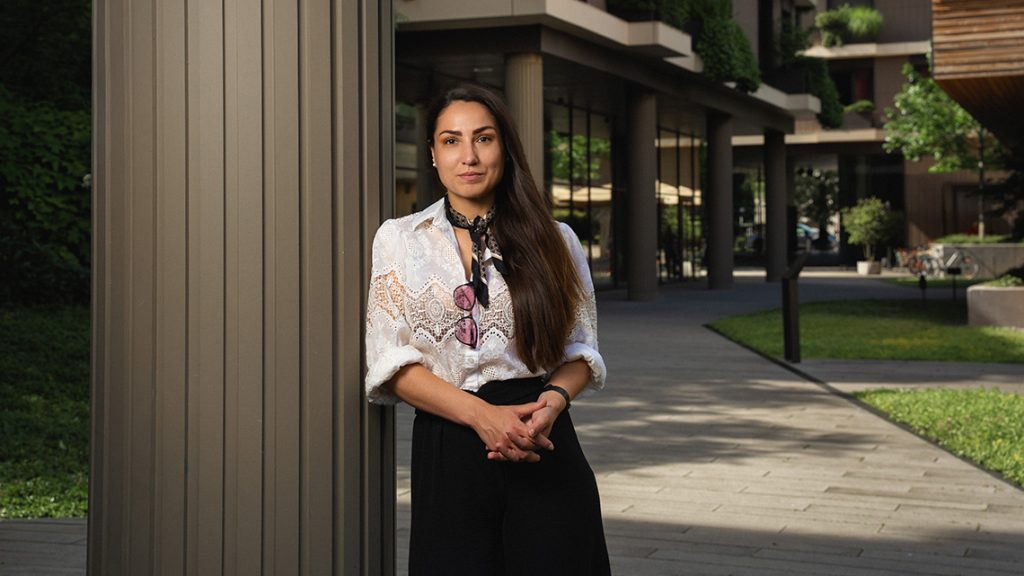
A building is never really about the building. It is about the life that unfolds within it.
Studying Applied Art and Architecture felt, at that point, less like a choice and more like a natural continuation of a curiosity she had carried since childhood. “Over time, I realized that architecture and design are not only about aesthetics or functionality. They are about creating harmony between people and the spaces they inhabit,” she reflects. And on those dusty construction sites, in the gap between what a blueprint promises and what a finished room delivers, a dream begins to take root.
The Moment That Changed Everything
Early in her career, Sandra worked in established architectural offices, strengthening her technical foundation and learning the industry from the inside. Yet a persistent unease grew alongside her competence. She wanted more than execution. From the client’s first hesitant brief to the messy middle and the moment when a space stops being a plan and becomes an identity, she wanted to own the whole arc. She wanted her conscience to follow every decision she makes, every design she creates.
The clarity came during the COVID-19 pandemic, from the most unexpected of sources. Sandra applied for a position at one of the most respected international architectural firms. The interview went exceptionally well. But the offer that came back wasn’t a job — it was a challenge far more valuable than employment.
A senior director looked at her work, listened to her speak about design, and said, “Sandra, you love this too much to build someone else’s dream and get lost in it. You should build your own studio, and we would like to have you as a procurist in a few years.”
Those words, she says, became a wind at her back that has never stopped blowing.
She launched Ailour Studio in Zagreb in 2022 with no investors, no guarantees, and no safety net — only knowledge, determination, and an unshakeable belief that meaningful design begins with understanding people. Clients arrived through recommendations. One project led to another. The studio grew the way all genuinely good things grow — organically, on the strength of what it produced.
Designing for People First
What distinguishes Ailour Studio’s work is not immediately visible in the finished photographs. It lives in the process that precedes them.
Before Sandra draws a single line, she listens. Not politely, not procedurally, but with the kind of focused attention that hears what people mean rather than what they say. “Every project begins with listening, observing, and identifying the unique needs, habits, and aspirations of the client, even and mostly behind the words,” she explains. “I do not believe in standardized or copy-paste solutions in the long term. Every private space should reflect the identity of the people who use it.”
The results speak to that philosophy in ways that awards can only partially capture. A neglected 16-square-meter storage room in central Zagreb — one window, high ceilings, and nothing else — became the Parkside Loft: a fully realized urban dwelling of copper fixtures, antracit steel, exposed original brick, and a mezzanine gallery that doubled the living area without sacrificing a gram of its warmth. It earned the European Award Winner 2024 for Interior Design in Hospitality. More significantly, it became somewhere a person could genuinely feel at home.
A century-old villa in Goljak, crumbling and complex, became a 400-square-meter space where original oval stained glass, a sculptural semicircular staircase, and panoramic views of the city converge in a home that feels simultaneously historic and entirely alive. And on a working holiday in Cyprus, a resort owner mentioned an expansion of the pool. Sandra designed it before she dried off.
When clients describe what her spaces give them — not aesthetically, but emotionally — Sandra listens for one thing above all else. “When clients tell me they feel lighter, happier, and more at peace in their new space, I know the project has truly succeeded. That way, real life has started.”
Architecture as a Social Act
In 2020, an earthquake tore through Zagreb. The physical damage was severe. But Sandra had already been watching a slower, quieter rupture unfold in the city, which was neither caused by any earthquake nor could any reconstruction fund repair it.
Children retreating into digital worlds. Elderly residents aging in isolation, marooned in apartments too large for one life. For most people, these were symptoms of modern living. For Sandra, seclusion cut that short. “The city center is neglected, children are increasingly influenced by digital environments, older generations often experience loneliness in large apartments, and communities are losing the common touch where meaningful human interaction naturally occurs,” she observes.
Her response is the project that may define her legacy: a Generational Center near the river, conceived as two circular buildings, a kindergarten and a nursing home, sharing the same land and the same common spaces. The architecture is the idea. Put the very young and the very old in daily proximity. Let them move through the same courtyards, share the same light, teach each other the things that neither curriculum nor care plan can provide.
This approach with inter-generational centers is answering one of the most meaningful questions of today’s cities regarding collaboration of different professions, re-urbanization and connection of huge scale city plans with main points of architecture, people and urban units with profound humanism, technology and knowledge.
“My long-term vision extends beyond designing buildings. I want to contribute to designing healthier, stronger, and more connected communities,” she says.
The concept has a full management and operational model behind it. People responded immediately, because it puts a name to something they have long felt but never known how to fix. Ailour Studio is now seeking investors who see architecture not as a product, but as a catalyst for change.
This is not uniquely a Croatian conversation. In cities around the world, from Mumbai to São Paulo, from Lagos to Berlin, the same fractures are visible: isolation dressed as modern living, disconnection normalized as urban efficiency. Sandra didn’t solve a Croatian problem. She solved a human one, starting with the street she knew.
Where Trust Becomes the Blueprint
Sandra Jančić leads Ailour Studio the way she designs spaces — not by controlling every corner, but by creating the conditions for people to bring their best selves to work.
“Leadership is not about controlling every detail. It is about creating an environment where talented people can grow, enjoy their creative work, and contribute to something meaningful. When individuals feel valued and connected to a shared purpose, exceptional results naturally follow,” Sandra articulates her leadership vision.
There is something quietly radical about that belief in an industry that has long mistaken authority for excellence. And the world noticed. When the BIG SEE Architecture Award arrived from Ljubljana in 2024, it didn’t feel like an external validation; it felt like recognition of something that had always been true. That work, rooted in genuine human understanding, built without compromise and without imitation, needs no permission to stand alongside the finest in the world. It simply does.
To the next generation of women drawing their first blueprints — professional and personal, Sandra offers not a formula but a truth she has lived from the inside out. That the most meaningful work doesn’t come from mastering what already exists, but from the courage to bring what only you can see into the world. “No one can replicate your perspective, values, experiences, and way of seeing the world. The most meaningful work emerges when what you create is genuinely aligned with who you are.”
And when the path ahead goes dark, as it always does at least once: “Trust your vision, remain curious and keep moving forward even when the path ahead is not fully visible. To build is to understand wider and higher.”
To build, Sandra Jančić has shown us, is never just to construct. It is to design an aesthetic that mirrors your belief, elevates living, and transforms lives — to make permanence out of a vision and a shelter out of a soul.