
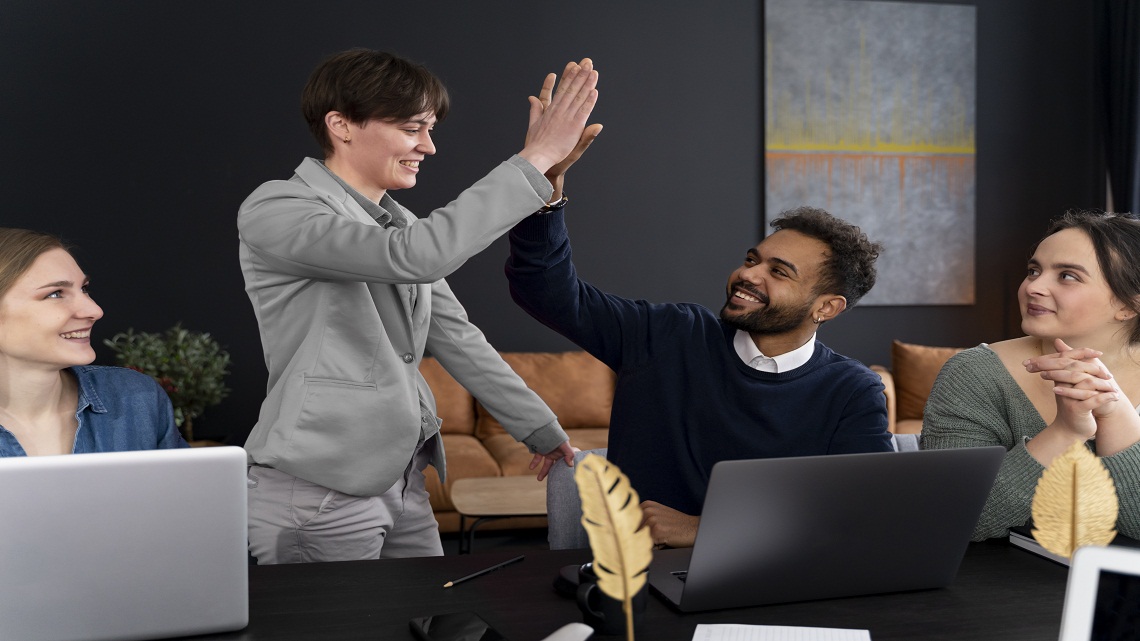
It’s a rather wet Wednesday morning in Estonia, ahead of the long Christmas and New Year’s holidays. The light drizzle outside leaves racetrack patterns across the windows of a mid-sized fintech company. Inside the office, the pitter-patter sound is comforting, like a soft background rhythm behind the shuffle of keyboards, coffee machines, and lowered voices. At the far end of the office is Emma Vogel, 34, a team lead who grew up somewhere between Nokia flip phones and the first iPhones. Seated behind her desk, she watches her youngest employee switch between three screens in under 10 seconds.
Jonathan, 22, born long after dial-up internet, hops from Slack to TikTok to Excel and back again. He spins a fidget spinner, absorbing information in fragmented bursts. Yet he never fails to deliver insights that surprise Emma every week. Still, she notices something almost odd: he disengages the moment meetings drag or when instructions arrive without context. She realizes that this is a trait shared among all the younger employees in her office. In fact, across Europe, thousands of managers are standing exactly where she is—between wonder and uncertainty—trying to understand how to lead a generation that grew up with limitless information as well as shrinking attention.
A recent survey by Eurostat revealed that Gen Z forms nearly 20% of Europe’s working population as of 2025, a figure estimated to only rise rapidly as younger cohorts enter the workforce. Another 2024 report by McKinsey Europe revealed Gen Z employees leave roles 36% faster when they feel disconnected or uninspired. These numbers echo what Emma has sensed all year: Europe isn’t facing an attention problem; it’s facing a leadership redesign.
A Shift from Managing Tasks to Managing Energy
Emma learned this the hard way. In her early months as a team lead, she tried the traditional model—weekly project update meetings, a neat calendar, formal updates, and so on. But it all fell flat as attention took a nosedive and cameras turned off. Employees began responding in limited words or by a sentence shorter than the questions asked. So, she introduced 15-minute daily check-ins, invited team members to define their own productivity cycles, and allowed event-based updates for those who worked better in short, intense bursts. Strangely enough, it worked as employees started engaging well. And for the first time in a year, the team finally felt alive.
Across Europe, leaders are redefining their approach in the same way. According to the European Foundation for the Improvement of Living and Working Conditions (Eurofound), flexible, self-managed work structures have become one of the top three drivers of retention for workers under 30. It’s quite a simple principle, actually, where leaders don’t have to demand infinite attention from employees. All they need to do is just design for human focus, acknowledge attention limits, and create experiences that fit within them.
Purpose Outperforming Paychecks
In Madrid, Copenhagen, Dublin, Prague, or wherever young professionals gather in co-working spaces or cafés, a common thread emerges today. The younger generation seeks autonomy over a list of instructions, and cares about meaningful contribution over a payslip. According to Deloitte’s 2025 European Gen Z Survey, 67% of Gen Z employees stay longer in roles where they understand the “why” behind their work.
This is also where leaders like Emma have adjusted their management approaches. Instead of diving into tasks right away, she opens meetings with a story behind the project—discussing who it benefits, what it solves, what it prevents. For instance, when she shared that a new feature would help small German retailers reduce transaction disputes, Jonathan stayed back after the meeting to offer his two cents. This shows purpose doesn’t simply motivate employees; it tethers their attention.
When Gen Z Treats Feedback like Wi-Fi …
Europe’s younger workforce treats feedback like WiFi—it needs to be available, strong, and uninterrupted—unlike annual reviews that feel like fossils from a bygone era. A 2024 survey by the Institute for Employment Studies (UK) found that Gen Z prefers feedback cycles four times more frequently than the previous generations. This pushes leaders to adopt a mentor-coach approach for employees.
A once hesitant Emma now uses quick voice notes, informal check-ins, and spontaneous “What do you need?” moments with her team members. And interestingly, this style has also improved relationships across different age groups. Older, skeptical colleagues now find short, honest exchanges ease tensions they didn’t realize they carried.
Prioritizing the Mind and Body
Today, Europe’s young workers speak openly about anxiety, burnout, and overstimulation. According to Eurostat’s Mental Health in the Workplace Analysis 2024, nearly 55% of workers under 26 reported mental exhaustion linked to constant digital exposure. So leaders have started responding with:
- Shorter meetings,
- No-slide discussions,
- Wellness allowances,
- Deep-focus hours are established as protected time, and
- Optional “camera off” sessions for overstimulated days.
Emma introduced her quiet mornings twice a month so her team could enjoy a no-meeting, no-chatter time. And the employees who benefited most from this weren’t the introverts she expected to be, but the high achievers who rarely ever took their breaks.
Where Europe’s Leaders Go From Here
As Emma heads for the elevator after wrapping up for the day, she sees Jonathan enthusiastically explaining some new idea to a colleague. His attention isn’t the problem, Emma notices again; some people are just wired differently. And European leaders are quickly picking up on this. They no longer try to mold Gen Z and future generations by traditional systems, but rather shape management practices around how people naturally think, work, and connect today.
In 2026 and the years ahead, effective leadership in Europe and globally won’t be defined by how well managers enforce structure, but by how well they adapt. If Emma Vogel’s day proves anything, it’s that future generations aren’t disengaged or careless. They’re just waiting for leaders who meet them where they are and lead them forward with firm belief and faith in humanity.
To read more, EMEA Entrepreneur.