
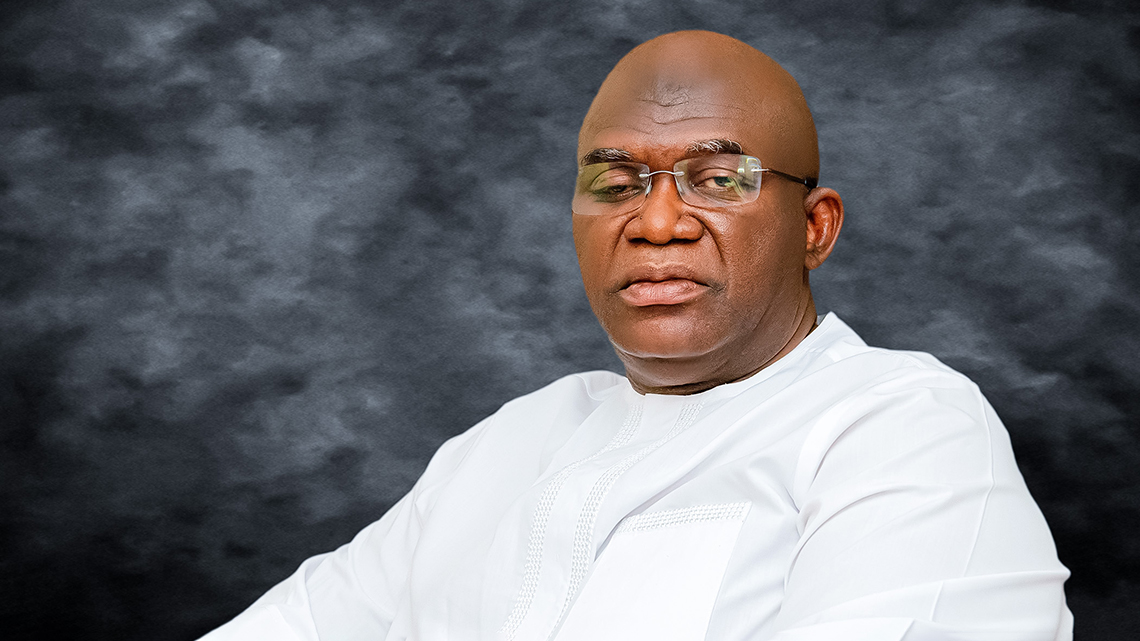
Alex Onuegbu, Founder, Brunel Engineering
Some people don’t grow into ambition; they grow out of containment. They learn early that comfort dulls instinct and that borrowed paths rarely lead to personal conviction. What drives them is not rebellion for its own sake, but a steady pull toward autonomy, mastery, and work that can withstand scrutiny. Given time, that pull stops feeling abstract and starts demanding form. Meet Alex Onuegbu, founder of Brunel Engineering, the embodiment of that moment when an inner pull stops being theoretical and begins to demand shape, structure, and consequence.
Long before Brunel existed on paper, it lived as a personal reckoning, formed in school, sharpened by observation, and driven by an unwillingness to live life within borrowed limits. Onuegbu was drawn to engineering not just as a profession, but as a discipline of precision, where intent meets execution and excuses have nowhere to hide. Well-built houses, flawless finishes, and systems that hold under pressure were never just objects of admiration; they were standards he felt compelled to defend.
As he watched Nigerian graduates excel overseas, matching and often exceeding global benchmarks, the conclusion became difficult to ignore. The issue was never intellect or training; it was a lack of confidence in local practice. That realization reframed ambition into responsibility. If Nigerian minds could thrive elsewhere, then Nigerian firms could lead at home. Brunel Engineering was born from that clarity, grounded in indigenous ownership and professional self-respect. Independence was essential. A salaried life felt like a straitjacket, too small for the scope he envisioned. As Onuegbu reflects, “Capability doesn’t become real when it’s imported; it becomes real when you trust it enough to build with it.”

Ownership as Strategy, Not Symbolism
At Brunel, ownership is not a badge; it is a burden shared, and a promise kept. Onuegbu chose a path few in the engineering sector dare to take: Brunel is owned by ten active employees, a rare model that places accountability exactly where it belongs, inside the work itself. To reinforce that shared stake, 30 percent of the company’s annual net profit is set aside for these employee-owners, a deliberate acknowledgment that Brunel’s growth and survival are collective victories. Expectations are high, but so is reciprocity. Brunel invests deeply in the welfare of its people and their families, offering health insurance, accommodation, transportation, education subsidies for employees’ children, full sponsorship for professional certifications and postgraduate studies, and even a home-ownership scheme for staff with ten years or more in the company. Onuegbu is clear about the logic: “If you want undivided commitment, people must see their future growing with the company’s.”
That same philosophy shapes how Brunel’s multidisciplinary teams operate. Under Onuegbu’s leadership, architects, geologists, hydrologists, economists, and engineers across multiple disciplines work as one integrated unit. Engineering, he insists, is an intertwined science, not a collection of silos. By pulling every discipline into a single basket, Brunel delivers robust, value-for-money solutions, each one carefully tailored to Nigeria’s specific environmental, economic, and cultural realities. There is no universal template, only solutions grounded in context and executed with intent.
Confidence Is the First Infrastructure
Conviction, for Onuegbu, was not born in a boardroom; it was forged early on the job. As a graduate trainee engineer, he witnessed a pattern that stayed with him: expatriate engineers were routinely placed on a pedestal, even when indigenous professionals were academically stronger, more experienced, and carried projects to success. The imbalance bred an unnecessary inferiority complex, one that had little to do with competence and everything to do with perception. That moment became decisive. Onuegbu resolved to build a firm that would restore dignity to local professionals by proving, without theatrics, that capacity already existed at home. As he puts it, “Confidence returns the moment people are trusted with responsibility.”
That belief now shapes how he views the future of infrastructure in Nigeria. By 2030, he expects the industry to be driven largely by locally sourced materials, cement, steel, doors, windows, roofing, tiling, and ceilings, supported by Nigeria’s rich mineral base. Add to that a climate largely free of earthquakes, hurricanes, and other natural disasters, and the foundation is unusually strong. With rapid population growth accelerating demand, Onuegbu sees an industry evolving fast, finding its feet, and preparing to compete confidently with the best in the world. For him, the equation is simple: when local talent and local resources align, progress stops being borrowed and starts being built.
Global Standards, Local Intelligence
World-class engineering does not require the erasure of local insight; it demands its elevation. At Brunel, Onuegbu has been deliberate about striking that balance. The firm builds active synergies with world-leading brands across continents, not to outsource thinking, but to sharpen it. By collaborating with international partners and engaging professionals from across the globe, Brunel creates a constant exchange of ideas, an intellectual cross-current that strengthens local teams rather than sidelining them. The result is simple and effective: global standards delivered through the Nigerian context, always optimized for value and relevance.
That same balance defines Onuegbu’s leadership. His mantra is uncompromising—the best or nothing—yet his method is deeply human. He is a firm believer in teamwork, not as a slogan, but as a force that builds confidence and stretches ambition. In his words, “Everyone in an organisation is somebody; dignity is what unlocks excellence.” No role is too small, no voice dismissed. That belief once paid dividends when one of Brunel’s largest projects came through a former mid-level employee who had moved to a government institution but remained fiercely loyal to Brunel. Experience, respect, and trust had outlasted titles. For Onuegbu, precision may build structures, but respect builds institutions.
The Discipline of Building What Lasts
At Brunel, sustainability is not a trend to be adopted; it is a responsibility to be designed in. Under the leadership of Onuegbu, the firm practices Green and Responsible Engineering by embedding environmental compliance into every building product, process, and system it delivers. From minimising pollution and waste to maximising efficiency and resource conservation, Brunel takes a full life-cycle view of its work, ensuring that environmental stewardship never comes at the expense of economic viability. As Onuegbu asserts, “Good engineering must leave the ground stronger than it found it.”
That same sense of responsibility defines how Onuegbu approaches public–private collaboration. Brunel has built an enviable record of working with government to deliver critical infrastructure, including the 105 Primary Health Care Centres project for the Rivers State Government and the Taraba State Masterplan 2050, among others. These partnerships, Onuegbu believes, are where national progress accelerates, bridging funding gaps, pooling expertise, and sharing risk intelligently. In a development landscape as complex as Nigeria’s, his experience shows that when trust underpins collaboration, infrastructure does more than serve the present; it secures the future.
For the Next Generation to Know
For Onuegbu, legacy is measured less by structures completed and more by mindsets shifted. What he hopes to leave behind is simple but uncompromising: proof that Nigerian entrepreneurs can execute complex engineering and construction projects to the same standard as anywhere in the world, without apology, and without dependence. Brunel, in his view, stands as evidence that local capacity exists and that critical roles do not need to be outsourced when discipline, diligence, and confidence are allowed to take root. As he shares, “What you commit to with discipline and consistency will always rise to meet you.”
That conviction extends beyond the worksite. Giving back is embedded in Brunel’s practice through a robust corporate social responsibility framework. The firm runs a dedicated prison outreach programme focused on access to justice and improved welfare, provides basic necessities to underserved inmates, and is engaging the government on the possibility of managing correctional facilities. Alongside this, Brunel is working to expand access to quality education, helping bridge the widening gap between privilege and opportunity. If there is a final message Onuegbu leaves behind, it is this: build locally, trust deeply, and leave the system stronger than you found it.