
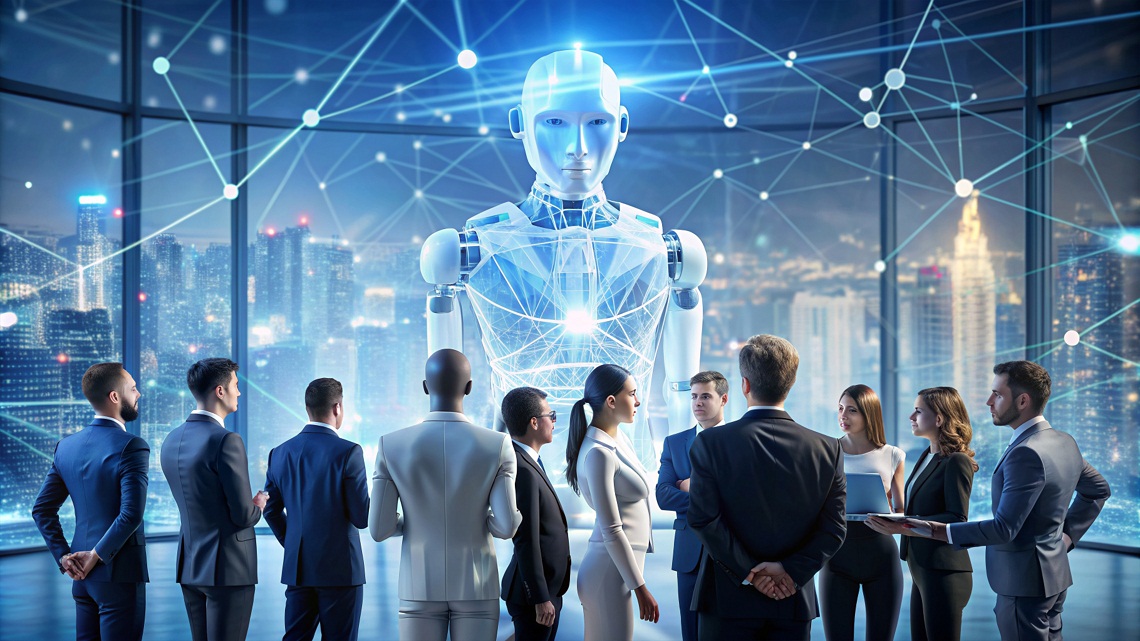
Organizations are leveraging AI as a co-pilot to drive change. From predictive analysis to automation, AI systems serve as a transformative partner in reducing process complexities, providing consolidated data insights to augment decision making. However, Ai cannot replace human leadership intelligence, as humans are the foundation for cultivating moral scaffolding, emotional connection, and true inspiration.
Although AI has a great deal of intelligence and analytical capability, human contributions are vital in change management. The core of change management is not solely about objective evidence, but ethical judgement, identifying the grey areas, and increasing confidence among employees. Effective change management is cultivated through a combined approach, where AI and leadership rooted in human comprehensions are balanced. Beyond AI driven recommendations, pattern recognition, and forecast, Human leaders are important to validate it in alignment with context and intention.
The Human Edge in Change Leadership: Key Reasons Humans Still Matter in AI-Driven Change
- Emotional Intelligence
In the growing requirement to inspire and influence people for cultivating breakthrough transformations, emotional intelligence is a critical element. AI is still unreliable to understand resistance, fear, lack of motivation etc. the way human intelligence comprehends.
AI algorithms are practical in generating polite and supportive emails, responses, however inefficient to maintain authenticity and integrity in relationship building. Leaders who validate fears, govern with empathy, build psychological safety, surpass internal risks, and contribute to conduct seamless transitions.
- Ethical and Strategic Judgment
In contrast to human decision making, AI operates through a pre-programmed set of data and on analytical emphasis. Human leaders consider contextual nuances, operate through a keen oversight toward the long term business impact, reputation, and all the vague areas which are negligible in AI analysis. Change leaders simultaneously manage both the strategic complexities and moral dilemmas in order to stay aligned to the social norms and prevent future implications.
- Vision and Inspiration
Artificial intelligence is effective in developing compelling narratives, bridge data gaps, and predict impacts but cannot ignite motivation or passion. One of the important qualities for leading change is providing clear vision and influence to achieve it successfully. Leaders who use story telling as a medium to articulate vision and generating purpose, motivate team members and help them develop a drive following ambitions without the fear of change or failure.
- Cultural Alignment and Vision
Every organization functions under an unwritten framework—habits, values, behavioral policies—and leaders are the major architect of the cultural system. While artificial intelligence is efficient to generate solid structures and a roadmap for direction, leaders significantly ensure alignment with the company core values and validated employees are culturally fit. Workplace compatibility is essential, as it directly influences factors such as retention, employee productivity, team harmony, and business identity.
The Limitations of AI in Change Leadership
In spite of the advantages, AI highlights several complexities in the context of change management. It includes:
- Absence of Emotional Intelligence (EQ)
One of the major drawbacks when directing a solely AI driven management is the empathy gap. Empathy in leadership is highly essential to remove roadblocks like internal tension, identify emotional cues, and make the employees feel valued.
- Lack of Cultural and Contextual Nuance
Artificial intelligence overlooks the negligible unspoken norms, traditions, and skill gaps etc. that highly affect employee motive and productivity.
- Ethical and Moral Vacuums
AI systems are insufficient to streamline heartfelt encouragements, or make people feel completely seen or heard. Through kindness, active listening, real life experience, human leaders rectify problems in a morally suitable conduct.
How to Integrate AI and Human Leadership
- Use AI as a Co piolet
Utilizing artificial intelligence (AI) as a tool provides better credible forecasting and data insights but human leadership judgement can spot errors, understand nuances which AI often overlook. Once an AI model has informed applicable strategy based on organization vision, the human resource can focus on relationship building and sustaining organisational ethics in decisions and promote resilient culture.
- Strategic Implementation Steps
- Align AI outputs to the organizational vision change initiatives.
- Create continuous feedback loops to enhance the efficiency of AI recommendations.
- Utilize both the quantitative intelligence from AI combined with human subjectivity to foster decision making impact.
- Continuous Learning and AI Literacy
Leaders and team members must understand the possibilities and limitations of AI to effectively blend contributions at an optimal capacity. AI literacy allows the human authorities who leverage AI systems in information processing to develop a thoughtful evaluation of what the data signifies, identify bias and validate whether it’s ethically as well as culturally appropriate.
- Human-Centric Focus
While Ai provides technical and strategic support, empathy, judgement, cultural alignment and ethical governance is crucial for truly cultivating team cohesion, resilience and inspiration, instrumental elements to drive successful organizational transitions.
Conclusion
Artificial intelligence has become a powerful organizational resource for providing insight, scalability, and efficiency beyond what was possible in decades. However, despite the tech advancement, change leadership demands human intelligence cultivate transitions without resistance. Characteristic traits such as emotional intelligence (EQ), ethical decision-making, cultural awareness, and the ability to motivate and inspire etc. are limited to AI efficiency. A collaborative effort between human leaders and Artificial intelligence is the currency to successful change management. As AI provides data to help formulate strategic decisions while the human provides value driven and ethical guidance, translating to meaningful change. Mastering a balance between AI and human leadership is paramount for organizations to accomplish a resilient workforce and enabling successful navigation of change and disruptions.
To read more, visit EMEA Entrepreneur.